
Biodiversity in the Garden

Biodiversity is a hot topic these days—and for good reason. Global extinction rates have risen dramatically, and many species are now considered “of concern.” The good news is that there are simple steps we can all take to help ensure wildlife continues to thrive. Many of these practices can even save time and money in the garden.
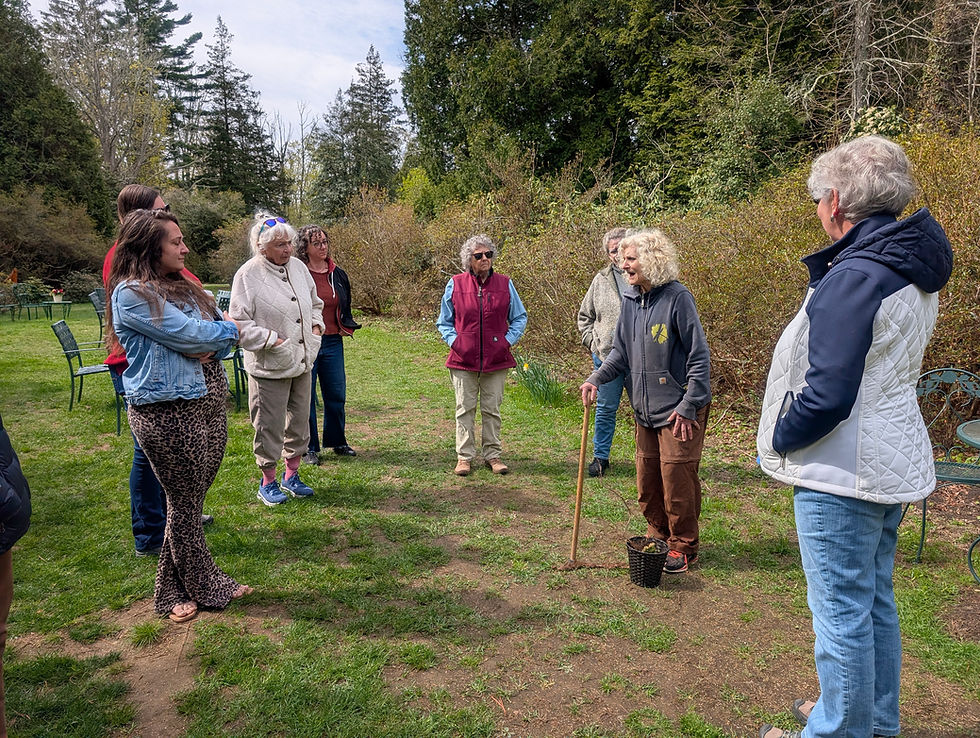
During recent tour by Dr. Sue Gordon, participants learned to identify valuable native species and observe natural features that provide shelter, food sources, and places for wildlife to reproduce.
Actionable Steps
Think of this as a menu of ideas—not a critique. Even small changes, made over time, can have a meaningful impact.
🛑 Do No Harm
Avoid using insecticides—even those labeled “eco-friendly.”
Herbicides are valuable for controlling some invasive species. Use only when necessary, at minimal volumes, and ideally with professional guidance.
Avoid fertilizers. Native plants are adapted to RI soils. Fertilization may also suppress mycorrhizal associations.
Minimize cultivating or otherwise disturbing soil. Disturbance can negatively impact soil ecosystem and aids in colonization by invasive species.
Reduce mowing frequency
Use smaller mowers when possible
Mow mid-morning or later. During cooler, early mornings, insects, reptiles & amphibians move more slowly
Mow from the inside out to give animals a chance to escape
Keep cats indoors; supervise or train dogs
If you keep chickens, limit their access to areas where biodiversity is the goal
💡 Lighting Matters
Artificial lighting is a major contributor to insect decline.
Outdoors:
Minimize brightness (lumens)
Use motion sensors or timers
Direct light downward with shields or hoods to reduce sky glow
Indoors:
Use blackout or insulated curtains at night to reduce light spill that disorients birds and insects
🐦 Reduce Bird Collisions
Install exterior screens or bird-safe window treatments
Use non-reflective glass when possible
Apply visible patterns (such as a 2” × 2” grid) to windows. Using a yellow Hi-liter is a good interim solution until a more permanent one can be implemented
Place feeders within 3 feet of windows to reduce collision force
Avoid placing indoor plants directly in view of windows
💧 Provide Safe Water
Use shallow birdbaths with sloped sides, or add stones for footing
Refresh water frequently—daily if possible
Never leave open containers (like buckets) unattended—these can cause drownings and become mosquito breeding sites
Cover rain barrels, or add a stick or ramp for escape
🌼 Support Wildlife with Thoughtful Planting
Choose plants suited to your site—and ideally native to the region
Preserve spent plant material whenever possible
Reduce fall and spring “clean-ups”—leaves can nourish soil and support habitat. Some insects overwinter and/or lay eggs in hollow stems or galls on Goldenrods, Milkweed, Joe-pye weed and others
Leave deadwood standing or on the ground when safe to do so—it provides critical habitat
Prune sparingly; pruning is for human‘s aesthetics more than plants or wildlife
Build layered plantings: canopy, shrub, and herbaceous layers
Extend bloom times with a diverse range of native species
Distribute plantings throughout your landscape to avoid concentrating pollinators in one area. This can reduce predation on desired species
Identify invasive plant species vs. natives volunteering or dispersing naturally. Then manage invasive species responsibly
⚠️ Important Reminder
Leave standing deadwood wherever it is safe and possible. Topping & shortening branches, vs. removal, can minimize risks. Advise your arborist of your goal, and see info from Penn State University
🌱 About Dr. Susan Gordon
Dr. Susan Gordon, horticulturist and garden manager, was involved with the gardens from 1976 to 2024. She worked closely with Mr. Kinney for many years and has maintained strong relationships with local landscapers, the University of Rhode Island, and RINLA. Dr. Gordon is deeply committed to protecting native ecosystems and promoting biodiversity.


Nice reminders, Jonathan. (and Sue) Thank you